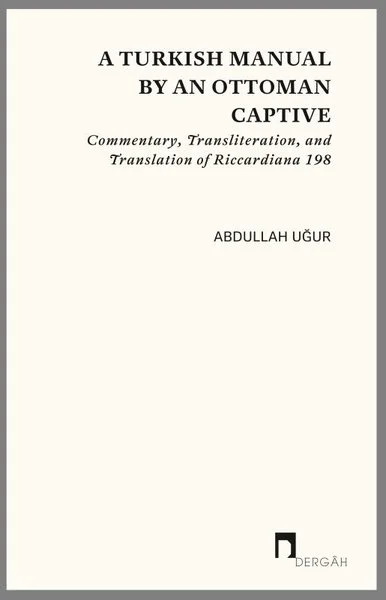
This book offers the first study, transliteration, and English translation of a little-known manuscript held in the Biblioteca Riccardiana in Florence (Ricc. 198): a manual for teaching Turkish, composed in 1667 by 'Abdullāh, a captive of the Grand Duke of Tuscany. Written aboard a ship bound for Livorno by a man who feared for his life and worked entirely from memory, the manuscript is unusual among the surviving materials for teaching Turkish in early modern Europe, most of which were produced by European learners or by captive copyists reproducing existing texts. 'Abdullāh, by contrast, composed his own text, and in doing so left behind not only a language-teaching manual but also a rare first-person trace of Mediterranean captivity. Alongside the dialogues, fables, proverbs, and poems he set down, the manuscript preserves moments in which 'Abdullāh speaks of his own condition, his fears, and his longing for home. Misidentified in the eighteenth century as a collection of Islamic prayers, it is examined here for the first time. Situating the manuscript within the wider history of teaching Turkish as a foreign language, this book brings to light both an unusual document and the voice of an otherwise ordinary man
(Tanıtım Bülteninden)
| Taksit Sayısı | Taksit tutarı | Genel Toplam |
|---|---|---|
| Tek Çekim | 100,80 | 100,80 |
-
-
-
-
-
-
%37İNDİRİM480,00TL 302,40TL
-
-%37
 Stokta yok%37İNDİRİM360,00TL 226,80TL
-
-
-
%37İNDİRİM250,00TL 157,50TL