

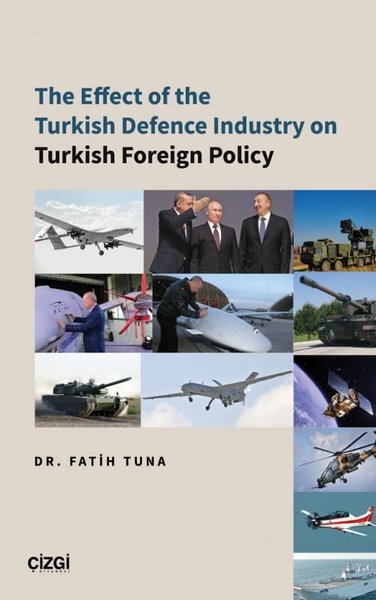
The defence industry plays a critical role in maintaining state sovereignty, ensuring national security, and countering potential threats. States take positions based on their strengths in the defence industry and use them as leverage in international relations. Further, the defence industry, which is closely related to foreign policy, shapes the position and influence of countries.
The defence industry can have a significant impact on a country's military strategy as well as its economic, political, and sociocultural spheres. Turkey's achievements in the defence industry have facilitated the country's ability to pursue an active foreign policy. In fact, Turkey's decision to join the Western bloc in response to the USSR's threats after World War II and its subsequent accession to NATO in 1952 marked a major turning point in its foreign policy.
The imposition of an embargo on Turkey following its intervention to protect the Turkish people in Cyprus in 1974 spurred the development of the domestic defence industry, which provided significant gains for Turkish foreign policy in the 2000s. The production of domestically manufactured defence products has enabled Turkey to leverage its foreign policy in Asia, Europe, Africa, and the Middle East. This book examines Turkey's evolving defence industry and the corresponding developments in Turkish foreign policy.
(Tanıtım Bülteninden)
The defence industry plays a critical role in maintaining state sovereignty, ensuring national security, and countering potential threats. States take positions based on their strengths in the defence industry and use them as leverage in international relations. Further, the defence industry, which is closely related to foreign policy, shapes the position and influence of countries.
The defence industry can have a significant impact on a country's military strategy as well as its economic, political, and sociocultural spheres. Turkey's achievements in the defence industry have facilitated the country's ability to pursue an active foreign policy. In fact, Turkey's decision to join the Western bloc in response to the USSR's threats after World War II and its subsequent accession to NATO in 1952 marked a major turning point in its foreign policy.
The imposition of an embargo on Turkey following its intervention to protect the Turkish people in Cyprus in 1974 spurred the development of the domestic defence industry, which provided significant gains for Turkish foreign policy in the 2000s. The production of domestically manufactured defence products has enabled Turkey to leverage its foreign policy in Asia, Europe, Africa, and the Middle East. This book examines Turkey's evolving defence industry and the corresponding developments in Turkish foreign policy.
(Tanıtım Bülteninden)
| Taksit Sayısı | Taksit tutarı | Genel Toplam |
|---|---|---|
| Tek Çekim | 187,50 | 187,50 |
-
%25İNDİRİM500,00TL 375,00TL
-
-
%25İNDİRİM380,00TL 285,00TL
-
%25İNDİRİM140,00TL 105,00TL
-
%25İNDİRİM460,00TL 345,00TL
-
-%25
 Stokta yok%25İNDİRİM230,00TL 172,50TL
 -
-
-%25
Stokta yok
-
%25İNDİRİM185,00TL 138,75TL
-
%25İNDİRİM250,00TL 187,50TL